
Opinion · SURFACE editorial · Skenet dispatch world model series · collection_mode · Not trained routing (Δw [redacted]-gated) · Receipt-backed proof
Honesty stamp: GREEN
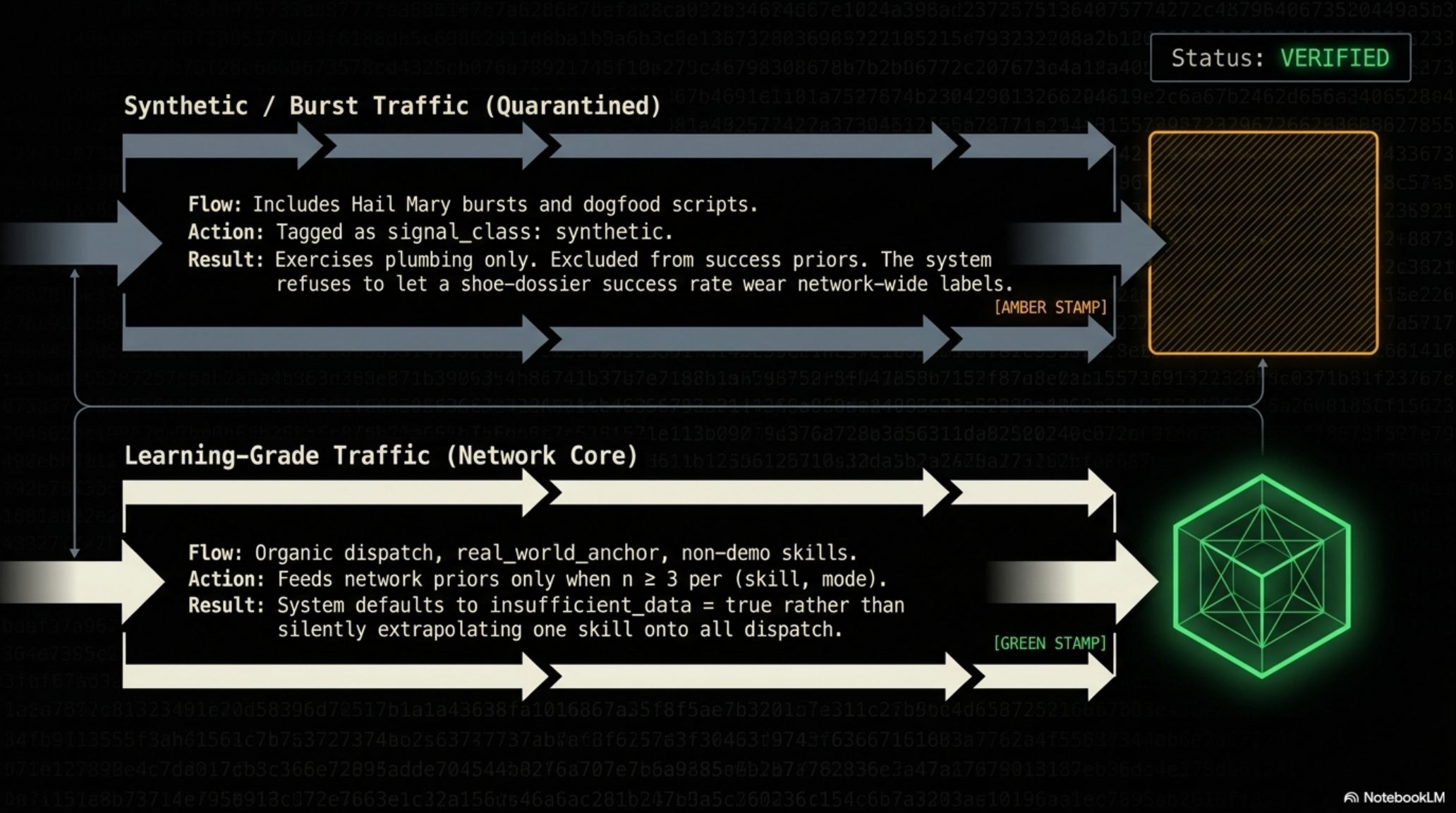
Burst traffic is not a validated population
Credit-burn shoe dossiers, dogfood gap-fill scripts, and synthetic probes exercise the write path. They prove the marketplace can ingest, label, and settle rows under load. They must not wear network-wide learning labels or success priors.
This is the same integrity move as epoch_unverified on qualify surfaces — say what you have not verified.
Two traffic classes (from the deck)
Synthetic / burst (quarantined)
- Sources: time-boxed burst windows, dogfood scripts, gap-fill probes
- Tag:
signal_class: synthetic - Use: plumbing proof only — excluded from success priors
- Honesty:
AMBER— useful, not representative
Learning-grade (network core)
- Sources: organic dispatch,
real_world_anchor, non-demo skills - Tag:
signal_class: real - Use: feeds priors when n ≥ 3 per (skill, mode)
- Default:
insufficient_data: truerather than extrapolating one skill onto all dispatch
Immune response checklist
- Tag burst rows at ingest — never merge into headline success rates
- Gate auctions and steering on learning-grade counts, not totals
- Time-box credit-burn windows — chronic synthetic majority is a condition, not a one-time fever
- Publish corpus split in every partner-facing chart
Why partners should care
If you share dispatch logs, you need a counterparty that will not launder synthetic traffic into your benchmark. SKENAI's corpus API exposes the split publicly so falsifiability survives contact with marketing.
Navigate: ← Part 3 · Part 5 → · Series hub — all articles